
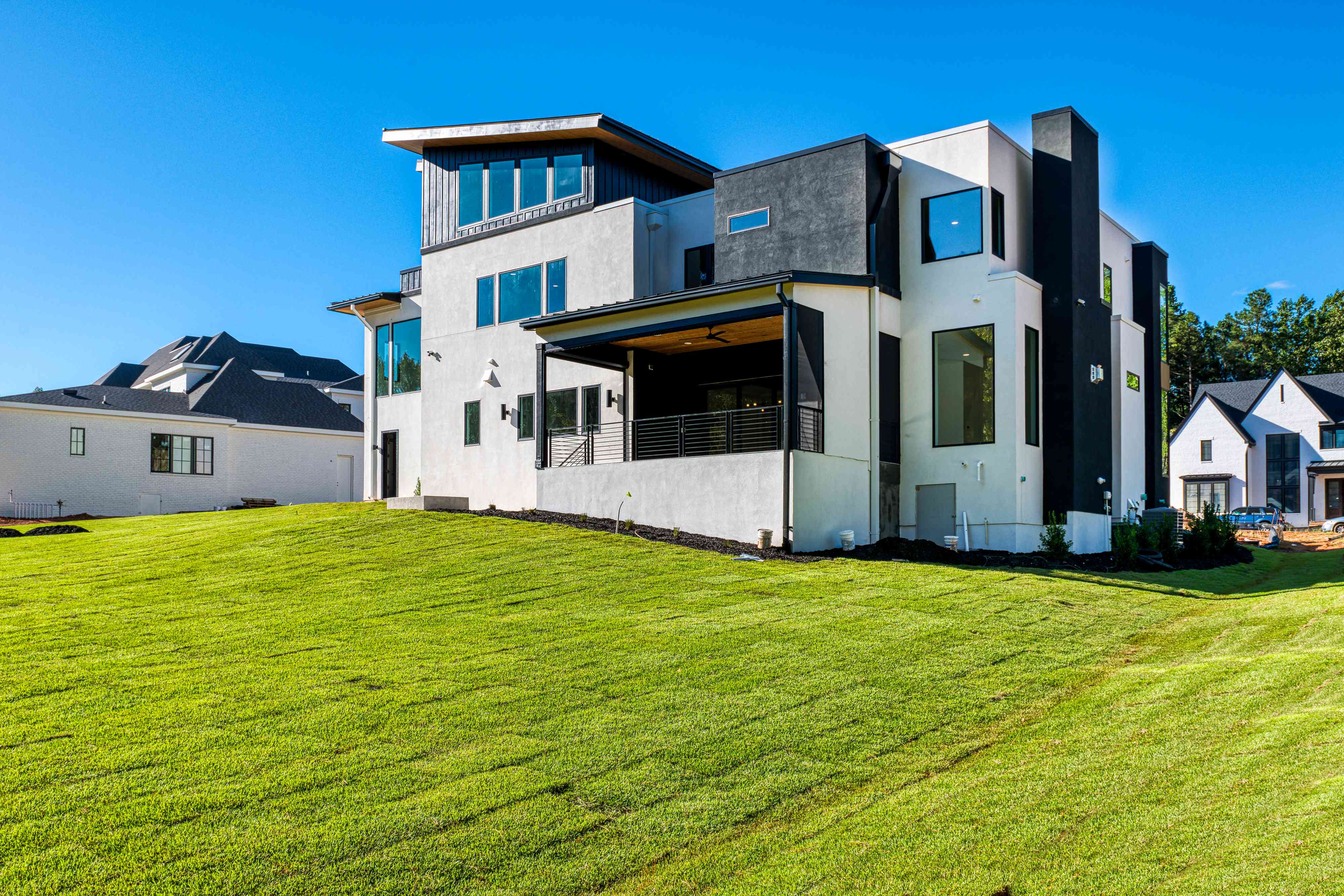
It's the most common crossroads in Raleigh's established neighborhoods: you love the street, the trees, the school district — but the house is fighting you. Sixties ceilings, a chopped-up plan, systems on borrowed time. Do you renovate deeply, or take it down and build what you actually want? Here's the framework we walk clients through, with the 2026 numbers attached.
Start with the 60% rule
Get a real (not hopeful) estimate for the renovation that would truly satisfy you — then compare it to the cost of building new on the same lot. When the renovation approaches 60–70% of new-construction cost, rebuilding usually wins. At that threshold you're spending near-new money and still inheriting the old foundation, framing dimensions, floor-to-floor heights, and every surprise hidden in the walls. Below roughly half the cost of new, a renovation is often the smarter, faster path — especially when the bones are good.
| Path | 2026 Cost / Sq Ft (Raleigh) | Typical Timeline |
|---|---|---|
| Cosmetic renovation | $60 – $150 | 2 – 5 months |
| Whole-home renovation | $150 – $350+ | 8 – 14 months |
| Structural reno + addition | $250 – $450+ | 10 – 18 months |
| Tear-down + custom rebuild | $300 – $800+ (luxury tier) | 16 – 28 months incl. design |
For a deeper look at new-construction pricing by tier, see our 2026 cost-to-build guide.
When renovation wins
- The structure has real character. Pre-war millwork, masonry, and proportions are expensive to reproduce and irreplaceable when demolished. If the house has architectural merit, renovation preserves value a rebuild can't.
- The existing footprint is grandfathered. Many older Raleigh homes sit closer to lot lines than current setbacks allow. Renovating an existing nonconforming structure can keep that position; a tear-down generally must comply with today's zoning. Sometimes the old footprint is the asset.
- The plan mostly works. If 70% of the layout suits your life and the bones are sound, redirecting budget into kitchens, baths, systems, and finishes buys transformation without structural money. Our kitchen and bath galleries show what focused scope can do.
- You need to stay in the schools — and in the house. Phased renovations can sometimes keep a family in place. A tear-down can't.
When tear-down wins
- The math says so. If the honest renovation number is 70% of new, you'll pay almost-new prices for compromised ceiling heights, old foundations, and a plan that still isn't yours.
- The systems and envelope are all at end of life. Roof, HVAC, electrical, plumbing, windows, insulation — replacing everything inside an old shell is the most expensive way to get a new house.
- The lot is worth more than the house. Across Raleigh's most desirable streets — and much of Cary and Chapel Hill — land value now dominates. When the structure contributes little, the lot is the investment; build the house the street deserves.
- You want what the old frame can't give. Ten-foot ceilings, twenty-foot glass, open spans, an honest primary suite. Some things can't be renovated into existence — they have to be framed that way.
Renovation spends money fixing what's wrong. New construction spends money building what's right. The question is which dollar works harder on your lot.
The Raleigh-specific wrinkles
Zoning and setbacks
Raleigh's Unified Development Ordinance governs setbacks, height planes, and impervious-surface limits — and they've evolved. Before deciding anything, have your builder or architect study what's actually buildable on your parcel today; see City of Raleigh Development Services for current rules. We do this analysis during pre-construction, before clients commit either direction.
Trees
Mature hardwoods are much of what makes Raleigh's older neighborhoods worth staying in — and they're regulated. A rebuild plan that costs you the canopy may cost more than it saves.
Permitting timelines
Renovation permits typically move faster than full new-construction review. If schedule is decisive, that difference belongs in the math.
How we'd decide it with you
We run both paths in parallel during pre-construction: a true renovation scope priced from real trade numbers, against a new-build concept priced the same way — including demolition, zoning analysis, and tree impacts. Side by side, with real numbers, the right answer usually announces itself. Either way, you decide once, with evidence — not twice, with regret.
What we inspect before recommending renovation
The first walk-through is not about finishes. We look at the structure, rooflines, foundation, drainage, framing spans, ceiling heights, mechanical routes, electrical capacity, plumbing age, window condition, and how the existing house sits on the lot. A pretty room can hide a bad renovation candidate; an outdated house can have excellent bones. The expensive mistake is deciding from photographs before anyone has opened the attic, crawlspace, or mechanical room.
In Raleigh's older neighborhoods, we also study what the current structure is allowed to keep. Existing nonconforming setbacks, mature tree canopy, and established driveway locations may all have value. Tear the house down and you may need to meet today's rules. Renovate carefully and you may preserve an advantage the lot would not receive again.
Temporary housing and daily-life disruption
Budget is only one side of the decision. A whole-home renovation can be faster than a custom rebuild, but it can also be more disruptive if the family tries to live through the work. Dust control, temporary kitchens, phased utilities, child safety, pets, and parking all become part of the project plan. For substantial structural work, moving out is often cheaper in practice because trades can work in a clear house and finish faster.
A tear-down has a longer total calendar, but the disruption is cleaner: move out, build once, move back into a finished home. A renovation can be the right answer when the scope is contained. When the scope touches every system and every floor, the lived experience may feel like building new without the clean slate.
How financing can tilt the answer
Renovation loans, construction loans, cash reserves, appraisal support, and the existing mortgage all affect the decision. Some clients can renovate in phases with cash flow; others need one construction loan and one defined draw schedule. Lenders also view a major renovation differently from a ground-up build, especially when the proposed value depends on luxury finishes that are hard to compare with nearby sales.
Before choosing, we recommend pricing the real scope and speaking with the lender about both paths. The right construction answer still has to survive the financing structure. When the numbers, schedule, and funding all point the same direction, the decision gets much easier.
How resale value enters the decision
Not every dollar spent on a renovation returns equally. Kitchens, primary suites, windows, exterior envelope, and mechanical systems usually support value because buyers understand them. Highly personal layout compromises, awkward additions, low ceiling heights, and partial system upgrades are harder to recover. If the renovation still leaves the home functionally dated, resale may not reward the spend.
A rebuild can reset the value story when the street supports it. In North Hills, Hayes Barton, Five Points, Cary, Chapel Hill, and selected Wake Forest acreage, buyers often pay for the certainty of a new structure, modern systems, energy performance, and a plan that fits current living. That does not mean every older home should come down. It means the neighborhood ceiling and the finished product have to be studied together before the budget is committed.
The hybrid option: renovate plus targeted new construction
There is a third path between polishing the existing house and starting over: preserve the valuable portion and build new where the home is failing. That might mean keeping a historic front elevation while adding a new kitchen and family wing, rebuilding a poor rear addition, or pairing a whole-home systems upgrade with a new outdoor living program. Hybrid projects are not automatically cheaper, but they can protect character while solving the plan.
Frequently asked questions
How much does a whole-home renovation cost in Raleigh?
When should I tear down instead of renovate?
Can I rebuild on the same footprint if zoning has changed?
Deciding between renovating and rebuilding?
Bring us the address. We'll price both paths honestly — zoning, trees, demolition, and all — so you can decide once, with evidence.
Request a Consultation →