
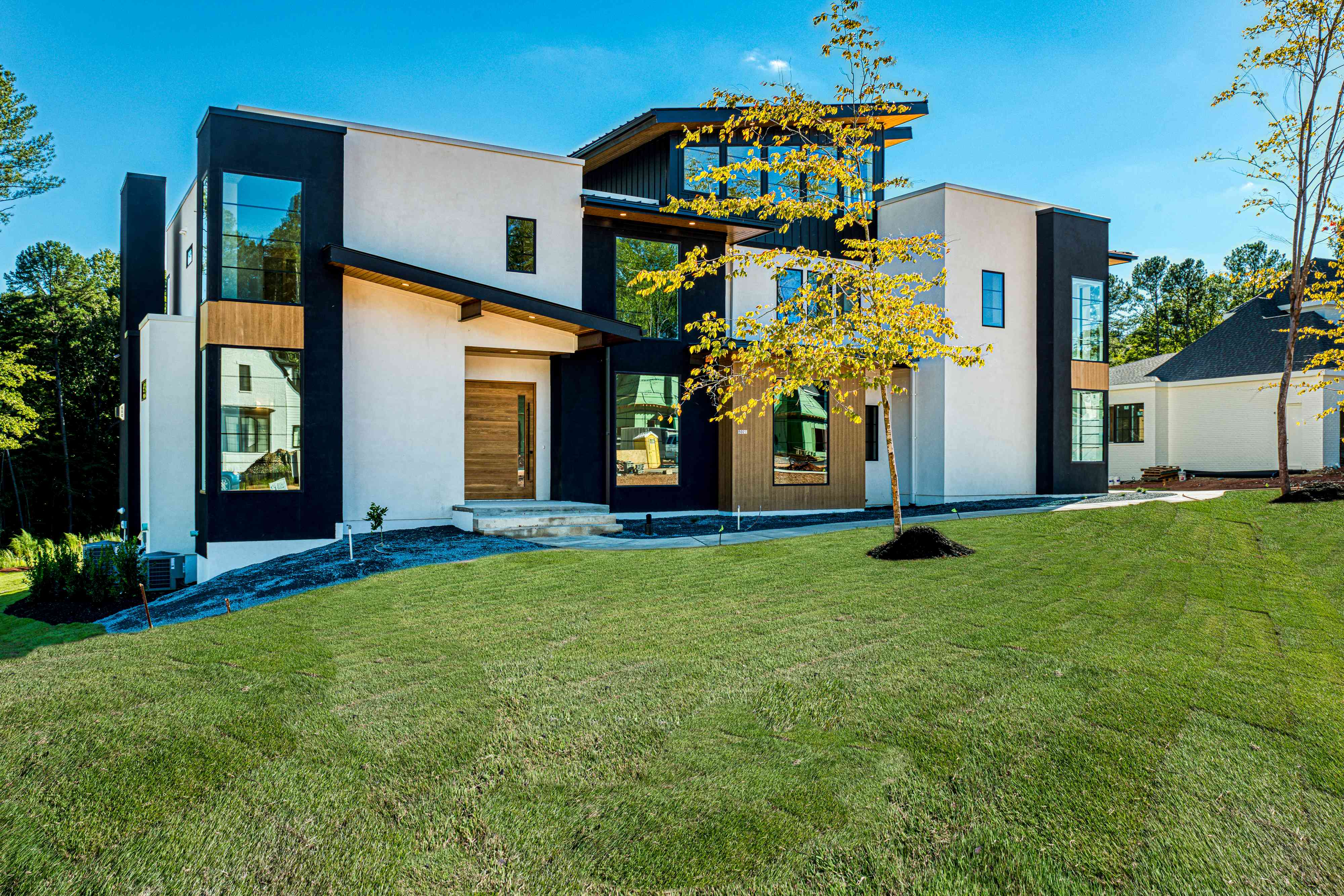
In 2026, building a custom home in the Raleigh area costs between $200 and $475 per square foot for most semi-custom and full-custom projects — and $475 to $1,400+ per square foot for true luxury construction. A 4,000-square-foot full-custom home therefore lands somewhere between $1.2M and $1.9M in construction cost, before land. Those are honest numbers, and the spread is wide for a reason: "custom" covers everything from a builder-grade plan with upgraded counters to a fully bespoke estate with imported limestone and a wine cellar.
This guide breaks down where your money actually goes — by tier, by line item, and by the decisions that move the number most. We build these homes every day across Raleigh, Cary, Chapel Hill, and Wake Forest, so these are the same figures we walk clients through in pre-construction.
Raleigh custom home costs by tier (2026)
| Tier | Cost / Sq Ft | 4,000 Sq Ft Example | What You Get |
|---|---|---|---|
| Semi-custom | $200 – $300 | $800K – $1.2M | Builder's plan library with modifications, standard structural package, good-quality finishes from set selections. |
| Full custom | $300 – $475 | $1.2M – $1.9M | Architect-designed from scratch, site-specific engineering, custom cabinetry in key rooms, premium windows and trim. |
| Luxury | $475 – $800 | $1.9M – $3.2M | Full design-build, custom millwork throughout, slab stone, designer appliance suites, smart-home integration, elevated outdoor living. |
| Estate | $800 – $1,400+ | $3.2M – $5.6M+ | Imported materials, structural steel and long spans, wine cellars, theaters, elevators, resort-grade pools and pavilions, full automation. |
Two homes with identical square footage can differ by a factor of three in cost. The drivers are almost never square footage itself — they're complexity, materials, and systems.
What actually moves the number
1. The lot — and what's under it
Inside-the-Beltline Raleigh lots routinely trade between $400K and $1.5M+ depending on street and size; established Cary and Chapel Hill parcels behave similarly, while acreage in Wake Forest, Pittsboro, or Chatham County can be found from $150K to $600K. But the purchase price is only half the story. A sloped, wooded, or rocky site can add $75K–$300K in clearing, grading, retaining walls, and foundation engineering before the first wall goes up. We always walk a lot with clients before they close on it.
2. Structural complexity
Twelve-foot ceilings, 20-foot window walls, cantilevered rooflines, and open spans all require engineered steel and specialty framing. Beautiful — and worth it when done deliberately — but a complex structure can carry a 15–25% premium over a conventional one of the same size.
3. Kitchens, baths, and millwork
The kitchen and primary bath are the two most expensive rooms per square foot in any custom home. Full-slab stone, inset custom cabinetry, and a professional appliance suite can put a luxury kitchen alone between $150K and $400K. Whole-house custom millwork — paneling, ceilings, built-ins — is a hallmark of estate-tier work and is priced accordingly. You can see the level we're describing in our kitchen portfolio.
4. Windows and glazing
Steel-look and true-steel window packages, oversized sliders, and floor-to-ceiling glazing are among the fastest-rising line items in luxury construction. A full estate window package can run $150K–$500K. They also transform the house more than almost anything else you can buy.
5. Outdoor living
Triangle clients increasingly spend serious budget outdoors: covered pavilions, outdoor kitchens, fireplaces, and pools. A resort-grade pool with integrated spa and surrounding hardscape typically runs $250K–$750K+. Our outdoor living gallery shows what those budgets actually buy.
The costs nobody puts in the brochure
- Design & engineering (5–10% of construction): architecture, structural and civil engineering, interior design, and landscape architecture.
- Permits & fees: City of Raleigh and Wake County permitting, water/sewer connection, and impact fees typically total $15K–$50K depending on jurisdiction. Timelines matter as much as fees — see City of Raleigh Development Services for current review schedules.
- Site utilities: long driveways, well and septic (common in Chatham and northern Wake), and underground power runs add real money on rural parcels.
- Contingency (5–10%): not optional. A disciplined contingency is the difference between an inconvenience and a crisis.
- Escalation: materials and skilled-trade labor in the Triangle have risen steadily; a 16–28 month design-build timeline should price escalation honestly rather than hope it away.
A realistic all-in example
A family commissioning a 5,500-square-foot luxury home on a $600K Cary lot should expect, in round numbers: construction at $475–$650/sq ft ($2.6M–$3.6M), design and engineering around $200K–$300K, site work and pool/outdoor living $400K–$800K, and contingency on top. All-in: roughly $3.9M to $5.3M. Anyone quoting that project dramatically lower is planning to find the difference in change orders.
The cheapest bid is rarely the cheapest build. Budgets fail at the start — in incomplete drawings and unpriced allowances — not at the end.
How we keep budgets honest
Shail Construction runs an open-book pre-construction process: complete drawings, engineered plans, and real trade pricing on every line item before ground breaks — so the number you approve is the number you build to. It's a slower start and a dramatically calmer finish. Seventeen years in, our handovers run on schedule because the planning did. You can read more about how we work on our residential page, or see finished results in our project portfolio.
Why two Raleigh custom homes with the same square footage price differently
Square footage is the roughest tool in the box. It helps set expectations, but it cannot explain why one 7,000-square-foot home costs $4M and another costs $7M. The difference is usually in structure, envelope, systems, and finish density: steel spans, window walls, masonry, slate or metal roofing, elevators, geothermal or advanced HVAC, custom cabinetry, appliance packages, slab stone, millwork, smart-home infrastructure, and the amount of outdoor living built at the same time.
Site work is the other major swing factor in the Triangle. A gentle Cary lot with utilities at the street is a different financial animal from a wooded, sloped Raleigh or Chapel Hill parcel that needs clearing, retaining walls, stormwater controls, long utility runs, and a complex foundation. The house may look identical in a rendering; the land underneath it changes the number before framing begins.
Where open-book pricing protects the budget
We prefer open-book pre-construction because it makes the budget a design tool instead of a surprise at bid day. The client can see what the window package costs, what the cabinetry allowance really buys, how much the outdoor pavilion adds, and where premium selections are carrying the number. That transparency gives the owner control: keep the imported stone and simplify the secondary baths, or protect the wine room and reduce landscape scope for phase two.
The opposite approach is a thin early estimate with broad allowances. It feels comfortable because the first number is lower, but the missing decisions come back later as change orders. In a luxury home, allowances are rarely neutral. If the drawings imply custom millwork, slab showers, paneled appliances, and specialty lighting, the budget needs those items priced honestly from the start.
A realistic contingency for 2026
For a well-planned custom build, we still like a 5% to 10% contingency. The lower end fits complete drawings, known soils, locked selections, and a straightforward jurisdiction. The higher end belongs on complicated lots, renovations tied to new construction, unusual structural work, or projects where the owner wants room for upgrades during the build. Contingency is not permission to be loose; it is protection against the handful of things no drawing can fully predict.
Frequently asked questions
How much does it cost to build a 5,000 sq ft custom home in Raleigh?
Is it cheaper to buy an existing home or build new?
What's the most expensive part of a custom home?
How much contingency should I carry?
Want a budget for your project — not an average?
Bring us your lot (or the one you're considering) and your brief. We'll walk you through an honest, line-item view of what it takes to build it well.
Request a Consultation →